
My First VR Headset: Why I Chose the Meta Quest 3 (And What I Wish I Knew Before Buying)
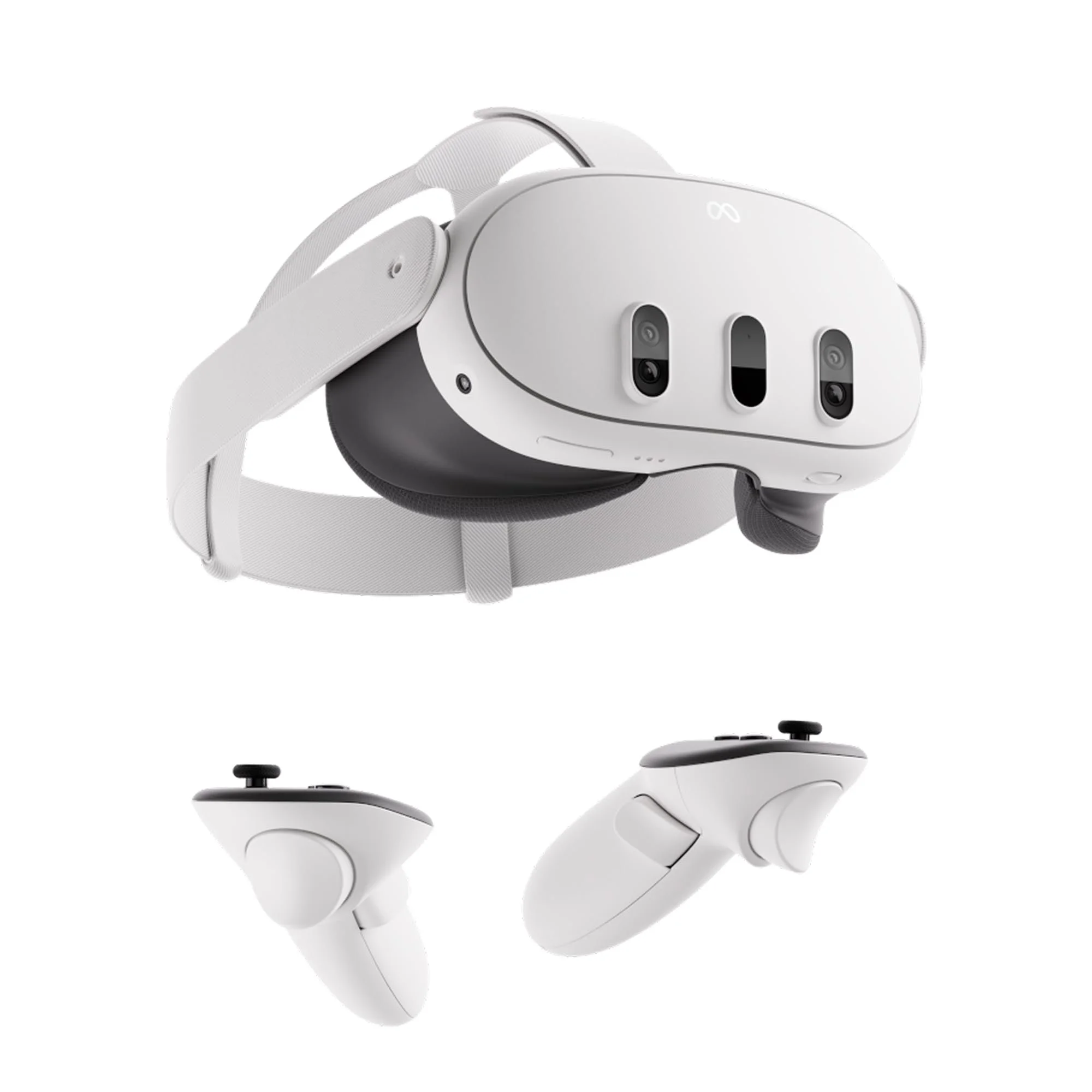
Why Buying Your First VR Headset Feels Overwhelming
Let’s be honest: VR is still confusing for newcomers.
You quickly run into:
Standalone vs PC VR
Mixed Reality vs Virtual Reality
Storage sizes
Controllers vs hand tracking
Game libraries
Comfort accessories
Battery life
Performance expectations
When I started researching, I realized something important:
Most reviews are written for tech enthusiasts — not first-time buyers.
That’s exactly why I’m writing this from a beginner’s point of view.
What I Was Looking for in My First VR Headset
Perfecto. Voy a ampliar cada punto como lo haría una persona real, no como ficha técnica, con contexto, ejemplos y “pensamientos internos” que ayudan de verdad a tomar la decisión. Esto está escrito para principiantes reales, no para reviewers técnicos.
No PC required
“I didn’t want to buy a gaming PC or deal with cables.”
When I first started looking into VR, one thing became obvious very quickly:
a lot of VR headsets don’t work on their own.
They require:
A powerful gaming PC
A specific graphics card
Extra cables
Software setup
Ongoing troubleshooting
And that’s when I stopped and thought:
“If I need to buy a PC just to use VR… am I really buying one product, or am I signing up for a whole tech project?”
I didn’t want VR to become:
A second job
A weekend setup project
Something that breaks every time drivers update
I wanted VR to feel like a console or a smartphone:
Turn it on
Put it on
Start using it
The idea of being tied to cables also mattered more than I expected.
VR is about movement — turning, stepping, reaching — and cables immediately break that immersion.
Choosing a headset that works completely on its own removed a huge barrier:
No extra purchases
No compatibility anxiety
No “will my PC handle this?”
For a first VR experience, that simplicity is not a luxury — it’s essential.
Easy setup
“I wanted something I could open, turn on, and use the same day.”
I’ve bought enough tech to know how this usually goes:
Long manuals
Account setups
Software downloads
Firmware updates
Something not working on the first try
So I set a personal rule:
If I can’t realistically be inside VR within the first hour, I probably won’t enjoy owning it.
With many VR systems, setup includes:
Installing PC software
Configuring tracking systems
Adjusting sensors
Troubleshooting display or USB issues
That’s intimidating — especially if VR is new to you.
What I wanted instead was:
Clear on-screen instructions
A guided setup
Minimal decisions
No technical vocabulary
The ability to unbox → power on → follow steps → start using it changes everything psychologically.
It means:
Less hesitation
More excitement
Higher chance you’ll actually use it again tomorrow
For beginners, ease of setup directly affects whether VR becomes a habit or a novelty.
Good visuals (without being ultra-premium)
“I wasn’t chasing perfection — just something that looked sharp and immersive.”
This is where a lot of people get stuck.
You start reading reviews and suddenly:
Everything is about resolution numbers
Lenses
Pixel density
Field of view
Refresh rates
At some point I asked myself:
“Do I want the best VR headset ever made… or do I want a great first VR experience?”
I wasn’t planning to:
Analyze pixels
Compare headsets side-by-side
Use VR professionally
I just wanted:
Clear visuals
Text I could read
Environments that felt convincing
No constant reminder that I’m looking at a screen
There’s a huge difference between:
“Good enough to forget about the hardware”
“Technically the best money can buy”
For a first headset, chasing perfection often leads to:
Spending more than needed
Overthinking the purchase
Waiting indefinitely
I learned that immersion matters more than specs, and that a well-balanced headset can feel incredible even if it’s not “ultra-premium.”
A large content library
“Games, apps, fitness, experiences — not just tech demos.”
This was a big one — and something many beginners don’t realize at first.
A VR headset is only as good as:
What you can do with it today
What you’ll want to do with it next month
Some headsets look impressive on paper but suffer from:
Limited app ecosystems
Few high-quality titles
Mostly short demos or experiments
I didn’t want VR to feel like:
“Cool for a weekend… then forgotten.”
I wanted:
Real games I could return to
Fitness apps I could use regularly
Exploration and relaxation experiences
Social or shared experiences
A large content library means:
You don’t run out of things to try
Your interests can change
Different people in your household can enjoy it
It also means less risk.
Even if one type of experience isn’t for you, there’s always something else.
For a first headset, content variety is what turns curiosity into long-term use.
Something future-proof
“I didn’t want to buy something already outdated.”
This was less about chasing the newest model and more about avoiding regret.
Technology moves fast — especially in VR.
Buying something already at the end of its life cycle often leads to:
Fewer updates
Less developer support
Missing new features
Feeling left behind quickly
I didn’t need:
Experimental features
Cutting-edge tech at any cost
But I did want:
Ongoing software updates
New apps coming out
A platform that developers care about
Future-proof, to me, meant:
The headset would still feel relevant in a year or two
New experiences wouldn’t be locked behind newer hardware
My purchase wouldn’t feel like a mistake six months later
For a first VR headset, that confidence matters.
It makes the purchase feel like an investment in experiences — not just a gadget.
The Real Decision Behind All of This
When you strip everything down, my decision came down to one simple question:
“Do I want VR to feel exciting… or exhausting?”
Every point above was about reducing friction:
Fewer dependencies
Fewer decisions
Less technical stress
More immediate enjoyment
If this is your first VR headset, I truly believe those factors matter more than raw power or niche features.
VR is incredible — but only if you actually use it.
And for me, choosing simplicity, balance, and accessibility made all the difference.
Why I Chose the Meta Quest 3 as My First VR Headset
After comparing alternatives, the Meta Quest 3 consistently stood out as the most balanced option for beginners.
Here’s why.
1. It’s Truly Standalone (No PC, No Console)
This was the biggest factor for me.
The Meta Quest 3 works completely on its own:
No gaming PC
No PlayStation
No external sensors
No cables while playing
You put it on, grab the controllers, and you’re inside VR.
For a first-time buyer, this matters more than specs.
2. Setup Is Surprisingly Simple
I expected setup to be annoying. It wasn’t.
From unboxing to being inside VR took me less than 15 minutes:
Turn it on
Follow on-screen instructions
Connect to Wi-Fi
Pair controllers
The interface walks you through everything.
If you can set up a smartphone, you can set up the Quest 3.
3. Mixed Reality Was a Bigger Deal Than I Expected
Before owning it, I thought mixed reality was a gimmick.
I was wrong.
The Quest 3’s passthrough cameras let you see your real room while virtual objects appear inside it.
This makes VR feel:
Less isolating
Less disorienting
Much safer for beginners
For first-time users, this is huge.
You can:
See your surroundings
Avoid bumping into furniture
Transition into full VR gradually
It made my first experiences far more comfortable.
My First Week Using the Meta Quest 3
Day 1: The “Wow” Factor Is Real
The first time you put it on… it’s honestly hard to describe.
Even simple demos feel impressive:
Looking around a virtual environment
Reaching out and interacting
Feeling inside something instead of just watching it
This is where VR finally clicked for me.
Day 2–3: Discovering Real Use Cases
After the initial excitement, I started exploring real uses:
🎮 Gaming
Games aren’t just played — they’re experienced.
Even casual games feel more engaging in VR.
🏃 Fitness
VR workouts don’t feel like workouts.
You move, sweat, and forget you’re exercising.
🎬 Media & Exploration
Watching videos, exploring virtual spaces, or just relaxing in immersive environments became part of my routine.
This is when I realized:
VR isn’t just about games — it’s about presence.
When Video Games Stop Being “Games” and Become Experiences
If someone had told me a few years ago that I would own more than 20 virtual reality games, I probably would have smiled politely and changed the subject.
Today, after spending countless hours inside Meta Quest 3, I can say this with complete honesty:
I don’t own 20 games.
I own 20 experiences that made me feel something different.
And that’s what many people still don’t fully understand about the best-selling and highest-rated Quest 3 games.
It’s not about specs, rankings, or flashy trailers.
It’s about how they make you feel once you’re inside.
Best-Sellers Aren’t Best-Sellers by Accident
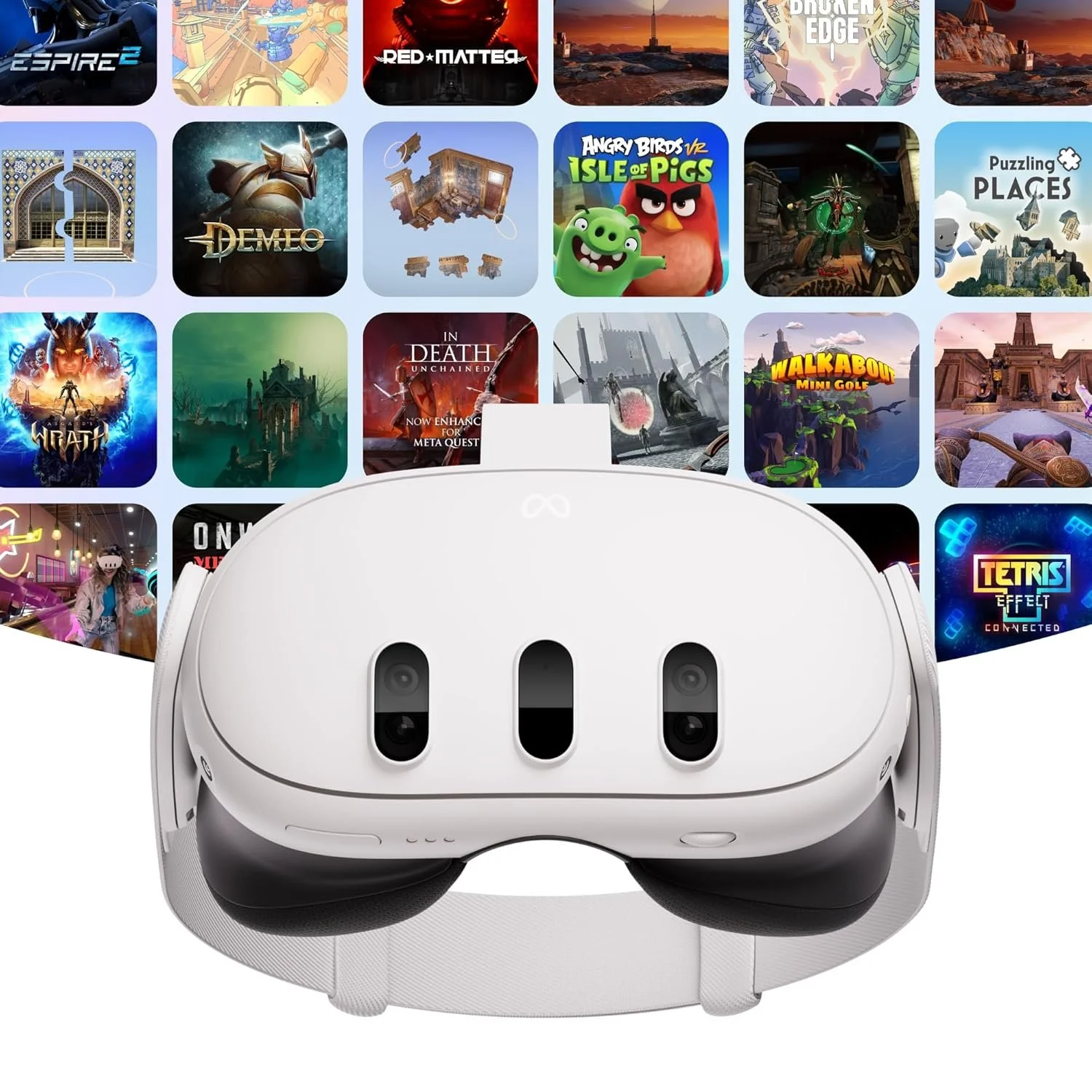
When you see titles like Beat Saber, Asgard’s Wrath 2, Resident Evil 4 VR, Pistol Whip, SUPERHOT VR, Walkabout Mini Golf, The Walking Dead: Saints & Sinners, or Red Matter 2 consistently topping the charts, that’s not marketing hype.
That’s experience.
These are games that:
Welcome you without demanding expertise
Teach you the world without words
Make you forget you’re wearing a headset
They don’t feel like VR games.
They feel like being somewhere else.
What Changes When You Play on Quest 3
I’ve played video games my entire life — consoles, PC, mobile.
Nothing prepared me for this.
On Quest 3:
Your body matters
Your hands matter
Your physical space matters
When you play Beat Saber, you’re not pressing buttons — you’re moving, breathing, sweating.
When you play Resident Evil 4 VR, you’re not watching fear — you feel it standing right in front of you.
When you play Walkabout Mini Golf, you’re not competing — you’re relaxing, unwinding, connecting.
And once you own many games, something powerful happens:
You realize you don’t want the same experience every day — and VR lets you choose.
Some days you want action.
Some days calm.
Some days exploration.
Some days laughter.
There’s always a game that fits the moment.
Games That Sell VR
These experiences are why people fall in love with virtual reality
Why the Highest-Rated Games Are Also the Most Loved
High ratings on Quest aren’t just about graphics or length.
They come from something more human:
Games that respect your time
Games that don’t punish you for learning
Games that make you say, “just ten more minutes”
Many of the highest-rated titles share one crucial thing:
their first impression is magical.
And that matters more than anything, especially for first-time VR users.
Owning More Than 20 Games Changes How You See VR
When you own only two or three games, you judge them more harshly.
When you own many, you begin to understand them.
You start noticing:
Not every game needs to be epic
Not every game needs to last 100 hours
Some games just want to make you smile
And every good one does something right.
Today, I can say this without exaggeration:
There isn’t a single game in my Quest library that I regret buying.
Some I play often.
Some occasionally.
But all of them add value.
Quest 3 Is Not Just a Headset — It’s a Gateway
What makes Quest 3 special isn’t just the hardware.
It’s the ecosystem that already exists — and keeps growing.
An ecosystem where:
Games evolve
Developers listen
Experiences improve over time
You feel that as a user.
You feel like you invested in something alive, not something disposable.
If You’re Thinking About Entering VR…
Don’t ask:
“What’s the best game?”
“Which one has the best graphics?”
Ask yourself:
What do I want to feel today?
Because on Quest 3, there’s a game for every answer.
And if there’s one thing I can say from the heart, after more than 50 games and countless hours inside other worlds, it’s this:
Virtual reality is no longer the future.
For many of us, it’s already part of the present.
And it’s an incredible one.
What Surprised Me (Good and Bad)
✅ The Good Surprises
Visual Clarity
The Quest 3 looks noticeably sharper than older VR headsets.
Text is readable. Environments feel clean.
Performance
Everything feels smooth.
No stuttering, no lag in normal use.
Content Library
There’s a lot to do.
Games, experiences, social apps, fitness, creativity.
⚠️ The Realistic Downsides (You Should Know These)
I want to be honest — no headset is perfect.
The Meta Quest 3 is impressive, but there are a few realistic limitations worth knowing before you buy.
Battery Life
Expect around 1.5 to 2 hours per session on average.
For me, that’s usually enough for a solid gaming session — but if you enjoy long VR nights or extended PCVR gameplay, you’ll likely want a solution that lets you keep playing without interruptions.
Comfort Over Long Sessions
The headset is comfortable enough out of the box, but:
Longer sessions benefit from better straps
Not mandatory — just something to keep in mind if you play often
Storage Can Fill Up
The 128GB version is perfectly fine for beginners.
However, if you install many large games or mixed reality experiences, storage fills up faster than expected.
🔌 A Simple Solution for Longer Play Sessions
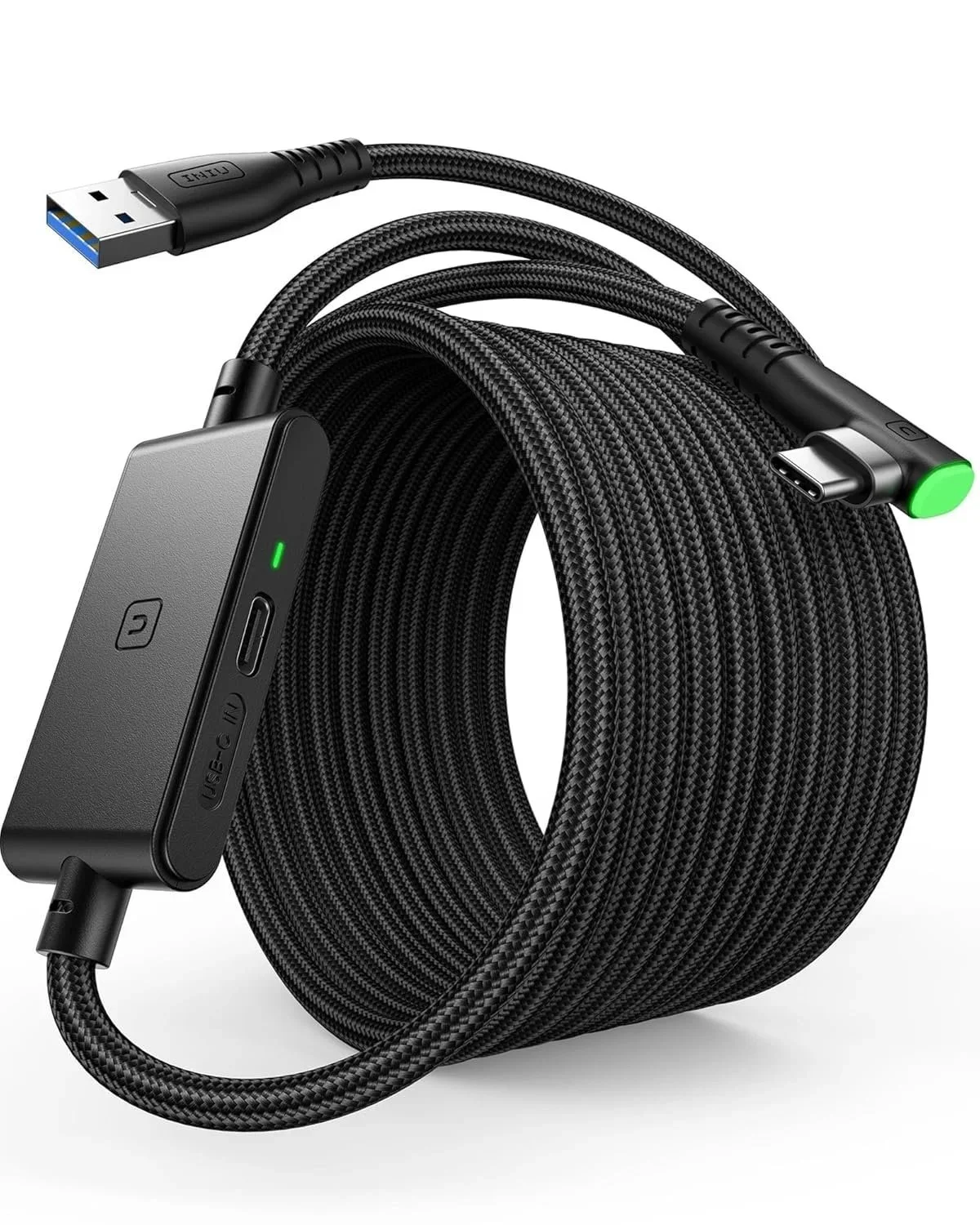
A good example is this USB-C Link Cable designed for Meta Quest, which allows you to:
Play for much longer sessions
Keep the headset charged while gaming
Connect directly to a PC for SteamVR and PCVR experiences
Avoid sudden battery interruptions mid-game
This doesn’t replace the standalone experience — it simply extends it when you want longer or more immersive sessions.
👉 You can check it out here:
https://amzn.to/4qFYNOz
One practical way to solve the battery limitation — especially if you plan to use PCVR or SteamVR — is using a link cable that charges while you play.
A good example is this USB-C Link Cable designed for Meta Quest, which allows you to:
Is the Meta Quest 3 Good for Motion Sickness?
This was one of my biggest fears.
Good news:
Most beginner-friendly apps are designed to reduce motion sickness
Mixed reality helps a lot
You can ease into VR gradually
I recommend:
Short sessions at first
Starting with stationary experiences
Avoiding fast movement games initially
I personally adapted quickly.
Meta Quest 3 vs Other Options (Beginner Perspective)
Compared to Meta Quest 2
Quest 3 feels more refined, sharper, and more future-proof.
If you’re buying new, Quest 3 makes more sense.
Compared to PC VR Headsets
PC VR can be more powerful — but also:
More expensive
More complex
Less beginner-friendly
For a first headset, Quest 3 wins easily.
Who I Think the Meta Quest 3 Is PERFECT For
✔ First-time VR buyers
✔ Casual gamers
✔ People curious about VR but hesitant
✔ Fitness-focused users
✔ Families and shared use
✔ Anyone who wants easy, wireless VR
Who Might Want Something Else
❌ Hardcore PC VR enthusiasts
❌ Users needing 4–5 hour sessions without breaks
❌ People who already own a powerful VR-ready PC and want maximum fidelity
My Honest Recommendation as a First-Time Buyer
If I had to make the decision again today, knowing everything I know now?
I would still choose the Meta Quest 3.
It hits the perfect balance:
Powerful enough
Simple enough
Modern enough
Flexible enough
Most importantly, it removed friction from VR.
And for your first headset, that matters more than raw specs.
Final Thoughts: Is It Worth Buying as Your First VR Headset?
Yes — if you want VR to be fun instead of frustrating.
The Meta Quest 3 doesn’t demand that you be a tech expert.
It lets you discover VR at your own pace.
If you’ve been curious about VR for years and kept postponing it, this is one of the safest, smartest entry points available right now.
👉 Ready to Take the First Step Into VR?
If you’re serious about getting your first VR headset, I recommend checking the current price and availability of the Meta Quest 3 on Amazon.
As an Amazon Associate, I may earn a commission from qualifying purchases — at no extra cost to you.
Sometimes the hardest part isn’t choosing the headset —
it’s finally deciding to jump in.
And honestly?
I’m glad I did.
🔗 Check Price & Availability on Amazon
👉 View the Meta Quest 3 on Amazon
https://amzn.to/4rdiKfs
Disclosure: As an Amazon Associate, I earn from qualifying purchases at no additional cost to you. Prices and availability are subject to change.
